segunda-feira, 8 de agosto de 2011

domingo, 7 de agosto de 2011
La Tomatina

Historia
(www.latomatina.es)
La Fiesta se hizo popular gracias a un reportaje de Javier Basilio en el programa de Televisión Española Informe Semanal Todo comenzó el último miércoles de agosto del año 1945, cuando unos jóvenes pasaban el rato en la Plaza del Pueblo para presenciar el desfile de gigantes y cabezudos y otros actos de la fiesta. Los chicos decidieron hacerse un hueco dentro de la comitiva de un desfile con músicos, gigantes y cabezudos. El ímpetu de los jóvenes hizo que cayera un participante que, preso de la ira, empezó a golpear todo lo que encontraba a su paso. Por un capricho del destino, allí había un puesto de verduras que fue pasto de la multitud enfurecida: la gente empezó a tirarse tomates de unos a otros hasta que las fuerzas del orden público pusieron fin a aquella batalla vegetal.
Al año siguiente, los jóvenes repitieron el altercado de forma voluntaria y llevaron los tomates de su casa. Aunque la policía disolvió en sucesivos años la reciente tradición, los chicos, sin saber nada, habían hecho historia. La Tomatina fue prohibida a principios de los 50, cosa que no disuadió a sus participantes que llegaron a ser, incluso, detenidos. Pero el pueblo habló y la fiesta volvió a permitirse, uniéndose más participantes y tornándose cada vez más frenética.
La fiesta fue, de nuevo, cancelada hasta 1957, cuando, en señal de protesta, se celebró e entierro del tomate: una manifestación en la que los vecinos portaron un ataúd con un gran tomate dentro. El desfile se acompañó con una banda de música que interpretaba marchas fúnebres y su éxito fue total. Finalmente se permitió la Tomatina y se instauró la fiesta de forma oficial.
La fiesta comenzó a ser popular en el resto de España gracias al reportaje de Javier Basilio, emitido en el programa de Televisión Española Informe semanal en 1983.
Desde entonces, año a año crece el número de participantes y el entusiasmo por La Tomatina. El éxito ha llevado a que La Tomatina de Buñol fuera declarada en 2002 Fiesta de Interés Turístico Internacional por la Secretaría General de Turismo.

Activities - songs
Hello, everybody!!!
How have you been? I really missed you... =)
Last week, my students did some activities listening songs. They learned new expressions and words... Now, take a look at the videos:
Fireflies - Owl City
The Lazy Song - Bruno Mars
September - Chris Daughtry
Have a wonderful week!!!
See ya =)
sábado, 6 de agosto de 2011
Save the black bears!!
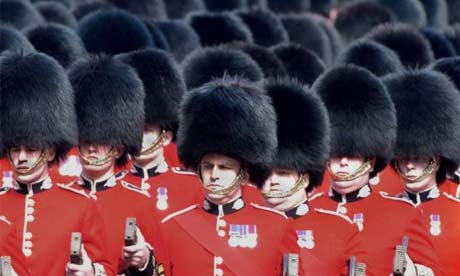
I'm here to talk about the bearskin tall hat, Do you remember the british army? those that wear a tall hat on their heads.SO a bearskin is a tall fur cap made by the skin of a black canadian bear, usually worn as part of a ceremonial military uniform. Traditionally, the bearskin was the headgear of grenadiers, and is still worn by grenadier and guards regiments in various armies. The cloth caps worn by the original grenadiers in European armies during the 17th century were frequently trimmed with fur. The practice fell into disuse until the second half of the eighteenth century when grenadiers in the British, Spanish and French armies began wearing high fur hats with cloth tops and, sometimes, ornamental front plates. The purpose appears to have been to add to the apparent height and impressive appearance of these troops both on the parade ground and the battlefield.
During the nineteenth century, the expense of bearskin caps and difficulty of maintaining them in good condition on active service led to this form of headdress becoming generally limited to guardsmen, bands or other units having a ceremonial role. The British Foot Guards and Royal Scots Greys did however wear bearskins in battle during the Crimean War and on peacetime maneuvers until the introduction of khaki service dress in 1902.Immediately prior to the outbreak of World War I in 1914, bearskins were still worn by guard or other units in the British, Belgian, Danish, Dutch, Russian and Swedish armies. This did not include use of the busby and other types of smaller fur headdress sometimes confused with the high bearskin. The Italian Sardinian Grenadiers had discarded bearskins in the nineteenth century but were to readopt them for limited ceremonial wear in modern times.
See more here (http://en.wikipedia.org/wiki/Bearskin).
sexta-feira, 5 de agosto de 2011
Tin Toy
My students from Teens 5 watched a video from Pixar and did 2 activities about it.
This is the video:
First they created the beginning of a story, one student saying a word at a time. Here's what they came up with:
The baby wants to play in the pool and the dog was barking in the garden. The toys were in the room, so the
Then, in pairs, they finished the story and read them to the other students.
Mateus & Beatriz
... so the toy ran to under the sofa cared of the baby and the dog because the baby broke the toys and the baby ate the toys. After this the dog left the pool and the baby went to the pool.
Isabela & Heitor
... so the baby was confused. He decided to take the toys and to play in the pool with them. The dog stopped barking and started running around the pool.
Mateus & Beatriz
... so the toy ran to under the sofa cared of the baby and the dog because the baby broke the toys and the baby ate the toys. After this the dog left the pool and the baby went to the pool.
Isabela & Heitor
... so the baby was confused. He decided to take the toys and to play in the pool with them. The dog stopped barking and started running around the pool.
Amazing seven-year-old girl's magic trick!
Hey guys! Are you into magic tricks? Do you know how to perform a few ones? Check out Kaya's performance. She's amazing! How does she do that?!!!
Have a nice week!
xoxox
Teacher Bel
Have a nice week!
xoxox
Teacher Bel
Assinar:
Postagens (Atom)